

Beschreibung
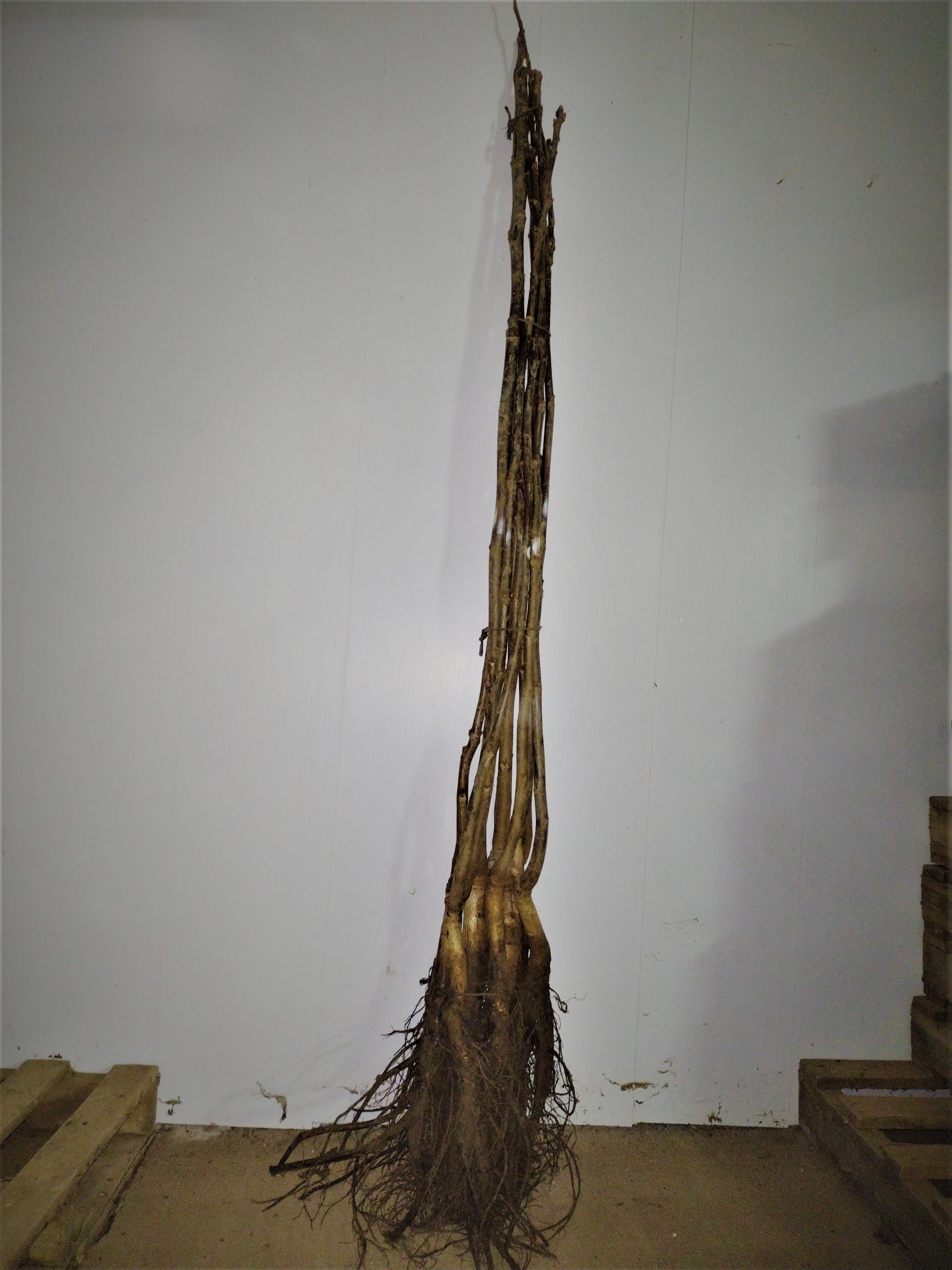
 The Fernette walnut was bred in France in 1993 as a cross between the Franquette and Lara varieties. Fernette is a late-ripening, excellently aromatic walnut variety with very high, consistent yields and good pollination properties. It requires low winter temperatures for optimal yields. The frost resistance of the walnut tree is important, not so much to severe winter frosts, but primarily to late spring frosts.
Height growth / tree crown
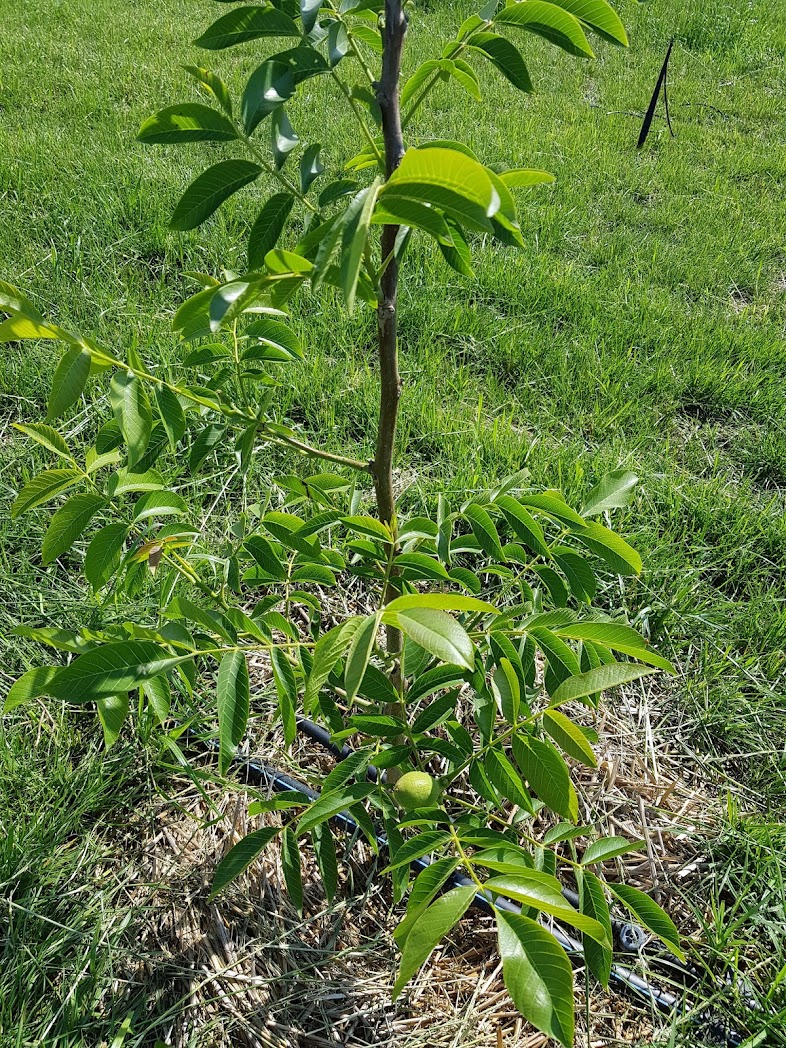
The Fernette walnut tree is a moderately vigorous, upright-growing tree. Originating in France, this walnut requires less space than, for example, its parent variety, the Franquette. The grafted walnut tree typically reaches a height of 6 to 8 meters.
This variety is highly productive because its branching occurs primarily vertically. This allows light to penetrate the crown, increasing the number of blossoms and, consequently, the number of harvestable nuts.
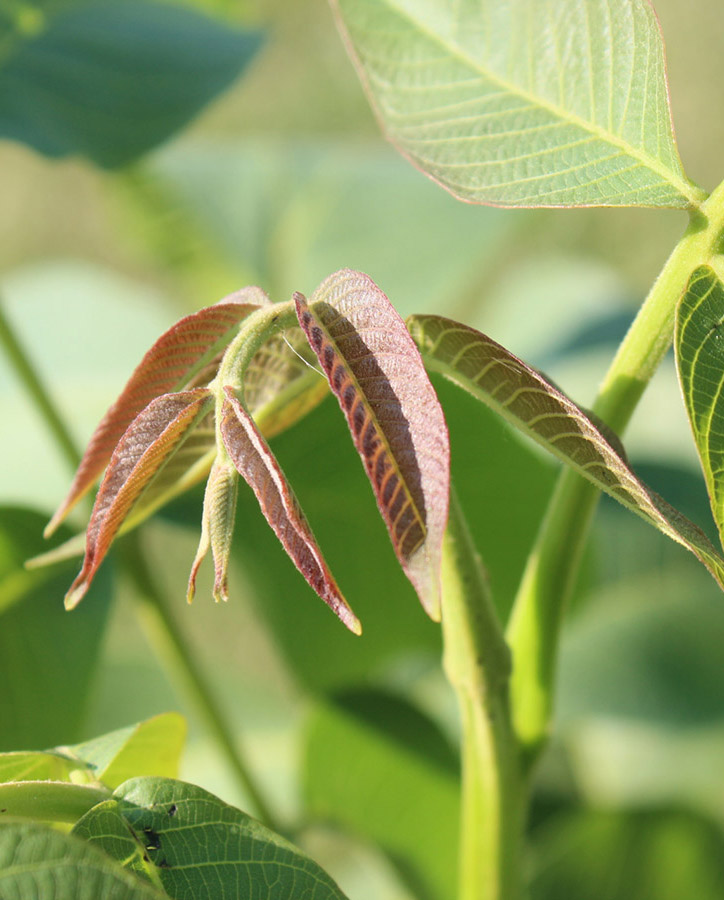
The leaves grow alternately. When they first emerge shortly after flowering, the foliage is reddish-brown. However, it turns dark green over the course of the year. The leaves feel leathery and somewhat oily-sticky and have an aromatic fragrance. They are pinnate, meaning that 5-6 leaflets, up to 11-14 cm long, grow from a central rachis (the elongated leaf stalk). The foliage of the Fernette walnut tree does not have a distinctive autumn color, but falls off in a pale green.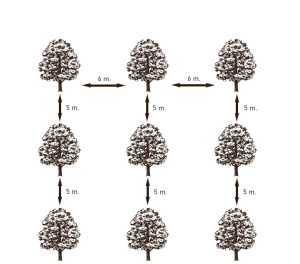
The Fernette walnut develops a pyramidal crown structure when young and a more spreading, spherical crown with age. Depending on the pruning method used, Fernette reaches a crown width of 7 to 8 meters. Sufficient light exposure in the crown promotes flowering and fruit production. Upon closer inspection (ideally without leaves), it becomes apparent that there is no single dominant terminal shoot. Fernette often produces 20 or more terminal shoots.
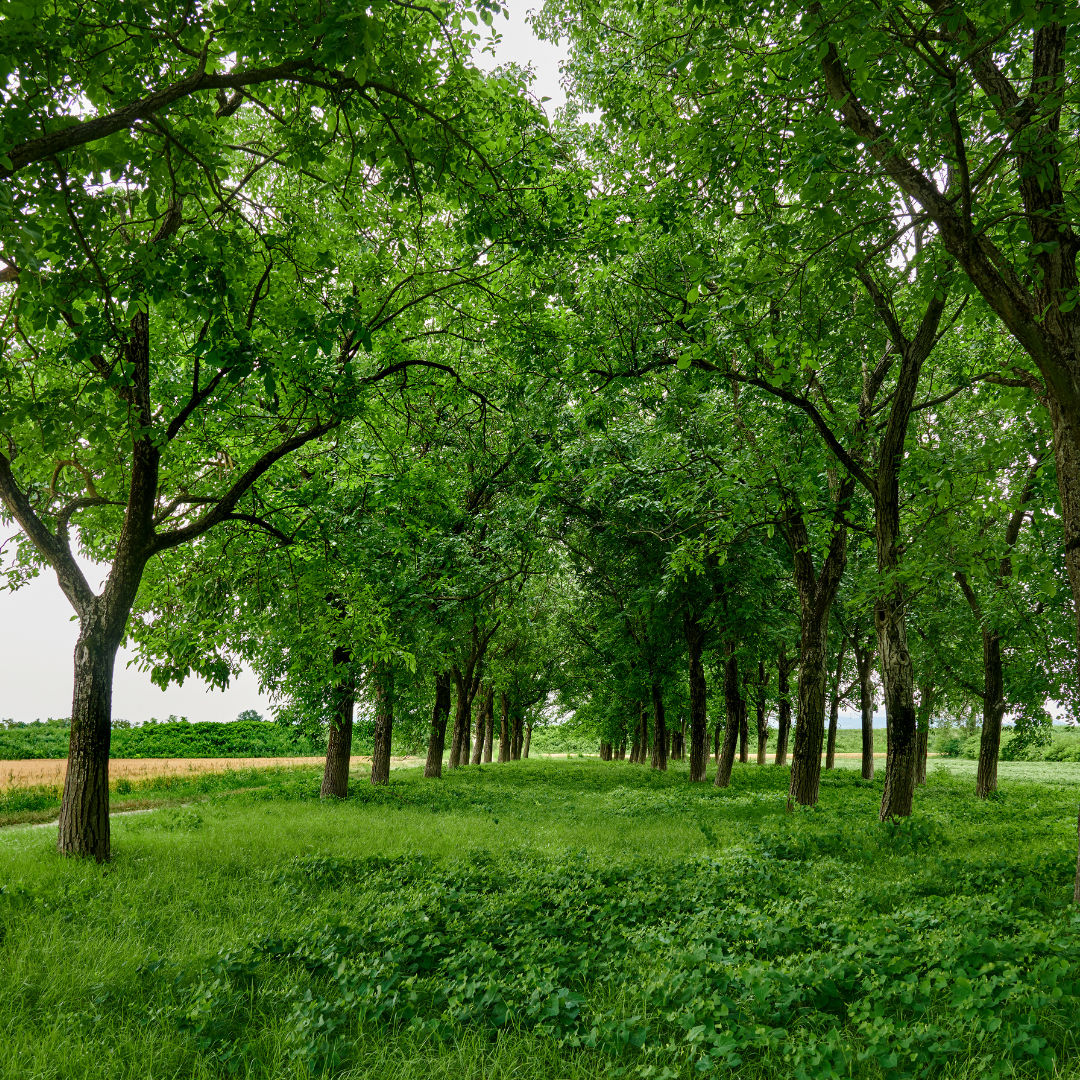
The Fernette walnut is suitable for high-density planting. Especially when cultivating Fernette for nut production, thinning often allows for a tree spacing of 5×6 meters to 9×9 meters, although it should be noted that the closer spacing is more appropriate for hedgerows and the wider spacing for traditional planting methods.
The optimal tree spacing therefore results in a required number of 123 – 330 walnut trees per hectare.
Flowering time / leaf emergence
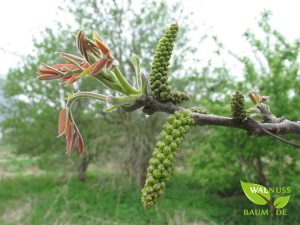 Fernette buds and flowers late. The walnut tree flowers between April 25th and May 5th (depending on the geographical region).
Fernette is a protandrous variety, meaning the male flowers bloom slightly earlier than the female flowers. The male flowers open in cylindrical catkins up to 15 cm long, which have overwintered naked and are therefore increasingly visible from late summer until bud break. In contrast, the inconspicuous female flowers only appear with the new leaves on the current year’s shoots, at the shoot tips in groups of 1-5 (singly or in clusters).
Late bud break usually protects against damage in areas prone to late frosts. Therefore, Fernette is particularly suitable for regions with low winter temperatures, late spring frosts, or generally unfavorable climates in both lowland and upland areas. Furthermore, the walnut tree has good frost resistance.
pollination
Fernette is dichogamous, meaning the male and female flowers of the same tree do not bloom concurrently. A good pollinator for Fernette is Fernor. Approximately 10% Fernor pollinator trees are recommended.
Fernette is also a good pollinator variety for other varieties. It is characterized by its very high pollen yield, which makes it an excellent pollinator for varieties such as Fernor, Lara, or Chandler.
yield
The Fernette walnut tree produces abundant yields early on (significantly higher than Franquette). The fruit develops laterally (fruit clusters on side shoots). This results in a regular and very high yield, allowing the tree to bear significant fruit from about 4-5 years of age.
The average yield from a tree (5-7 years old) is about 16-20 kg per tree, i.e. 2 – 6 tons of dried nuts per hectare, depending on planting distance, intensity of care and quality of the site.
Nut quality
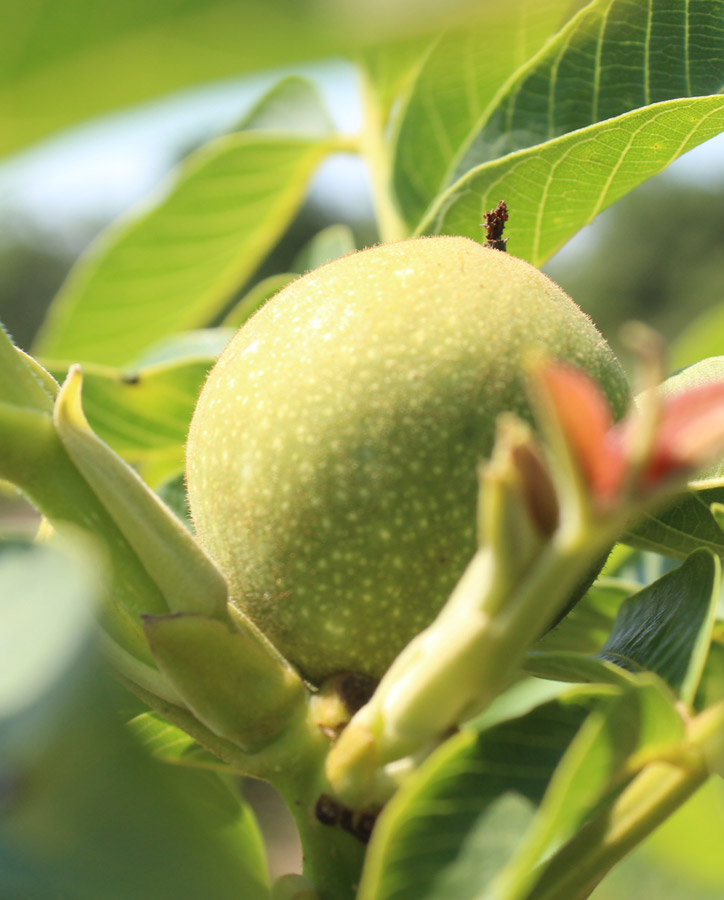
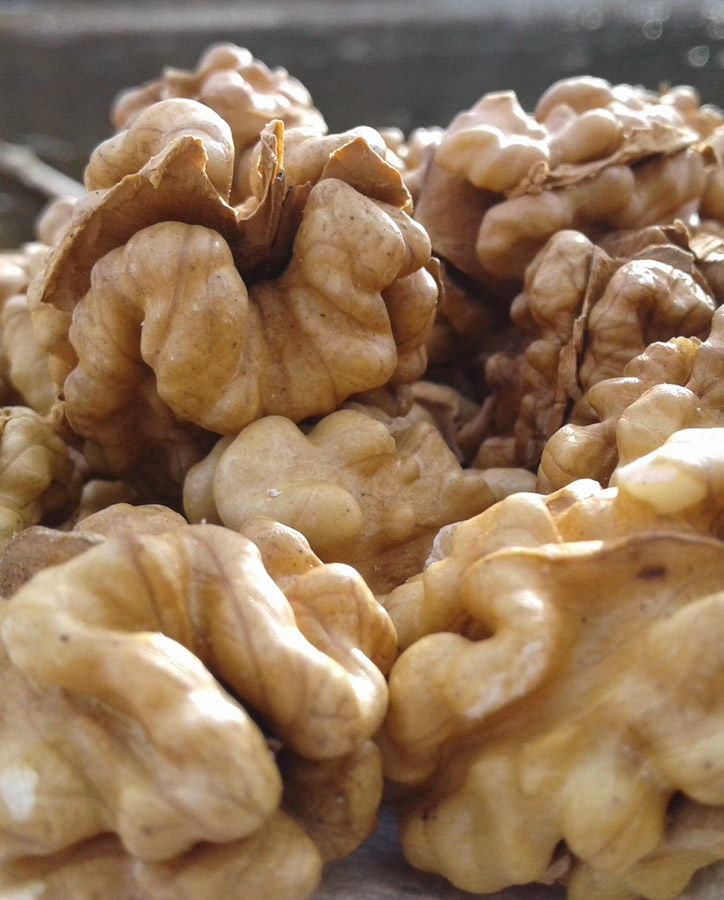
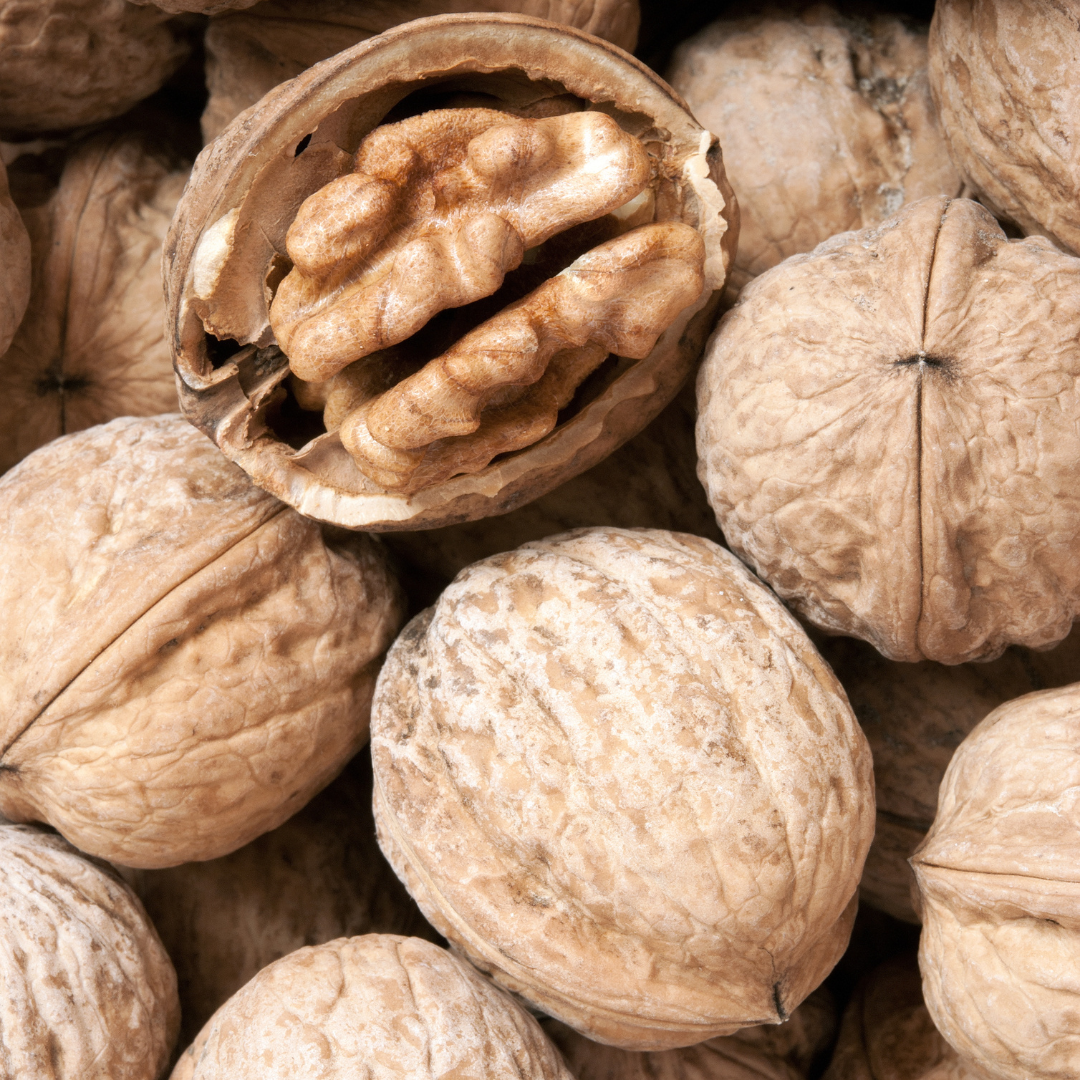
The fruits of the Fernette walnut tree are among the most beautiful and best of all walnut varieties. They are large, spherical, and beautifully shaped. Under optimal conditions, the nuts can grow very large—up to 36 mm in diameter. The kernel-filling nuts have an average weight of 11–12 g, are easy to crack, and can be cleanly removed from their shells. They dry and store well.
The kernel is strikingly light in color, with a kernel brightness level of 80-85%. The flavorful kernel fills the shell well, comprising up to 47% of the kernel. The shell of the nut is thin-walled, moderately furrowed, and easy to open.
The Fernette walnut has a kernel with high nutritional value and considerable medicinal properties. The kernel contains 64% fat, 20% protein, many vitamins, and abundant minerals (including potassium, calcium, iron, magnesium, and phosphorus).
In Australia, where Fernette is a widely cultivated walnut variety, this walnut received the highest overall scores for its taste.
Harvest time
The fruits of the prolific walnut tree ripen from the end of September to mid-October. Shortly before ripening, the fruit is still covered by a thick, fleshy, green husk. Only when the husk bursts and the nut falls out is it truly ripe and tastes mild and sweet.
Disease resistance
Fernette is a particularly frost-hardy walnut tree variety. It makes no special demands on the local climate or soil. The walnut tree has good resistance to anthracnose and is only slightly susceptible to bacterial blight. In good locations, Fernette is extremely healthy.
|
Height growth |
moderately fast growing |
|
treetop |
Crown volume of 17.3m³ |
|
Flowering time / leaf emergence |
Late-flowering (April 25 – May 5), the start of vegetation and flowering begins later compared to the varieties Izvor 10 and Sheinovo. Suitable for areas with low winter temperatures and late spring frosts. |
|
Nut variety |
protandrous (the male flowers appear before the female ones) |
|
Self-pollinating |
no |
|
pollinator varieties |
Fernor, Pedro; A good pollinator variety for Chandler and Lara |
|
Fruit set |
laterally supporting, therefore very high yields |
|
fruit load |
Early rich yields (significantly higher than Franquette) |
|
fruit |
Large (11-12 g), approx. 32-36 mm, spherical nut. After a cold summer, partial seam closure is sometimes observed on 5-10% of the fruits. |
|
Fruit wall (the peel or pericarp) |
thin, moderately furrowed, appealing appearance |
|
fruit kernel |
Kernel weight 5-6 g, kernel whiteness: 80-85%, marbled kernels, less light than Franquette, easily comes out of the shell, pleasant taste |
|
Harvest time |
End of September (25 – 30.09)/ Beginning of October |
|
Fat content in nuts |
64% |
|
core component |
47% |
|
Winter hardiness |
very good frost resistance |
|
Late frost |
very good resistance to late frosts |
|
Susceptibility to illness |
Good resistance to anthracnose, not very susceptible to bacterial canker. |
„Walnuts Bulgaria“ has many years of experience in grafting and planting walnut trees. To help you calculate how many trees you need for your land, you can use this online calculator. We generally recommend allocating 3-10% of the total number of trees to the pollinator varieties Franquette and Fernette.
[wpcode id=“1755″]
Reviews
Es gibt noch keine Bewertungen.